
On Being a Relationally-Focused Therapist
“Recently, I was chatting with an artist friend about the way she experiences color.” - BRIELLE
As a freelance art maker, she has spent years developing keen attention to the interplay of shades and hues. When she speaks about seeing color, she speaks about the interactions that happen in the space between, where her eye catches an infinite range of light particles and waves shaped by context and perception. In essence, color is happening in relation to the beholder. Color is a relational experience.
As a relationally-focused clinician, I think about the art of therapy in similar ways. Therapy is not primarily about something I do, or information I give; it is about what happens in the space between. It’s about how we relate to each other in the room and how that reflects the ways we relate to others in the outside world. It’s about how we connect with parts of ourselves that we know well. It’s about how we connect with the parts that are hidden, the parts we avoid, and the ones that hold pain. It’s about how we are shaped by the many systems we exist within—from families, societies, and cultures to ecosystems and generational legacies.
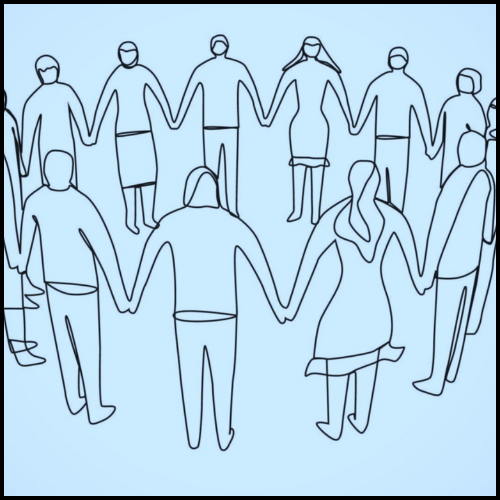
Humans are relational. We survive through interdependence.
Humans are relational. We survive through interdependence. We instinctively mirror each other and seek belonging to flourish. We meet different parts of ourselves through experiences with others, and the absence or breakdown of connection can be devastating. Substitutes for safe, human connection may deaden the ache, but rarely satisfy the hollow or hunger of human pain. Isolated pain is likely to echo across generations, yet presence and attachment can foster new possibilities. Individuals are unique, particular, and distinct, and yet cannot be deeply known apart from their context.
For my friend, experiencing color is not primarily about being able to isolate each shade or correctly label them; rather, the magic grows as she focuses on the delicate connections, context, and even her own response welling up. The same prairie grass may be experienced quite differently in overcast drizzle or vibrant sunset glow. At Bristlecone Therapy, we embrace this art of paying attention to interconnectedness. Whether working with couples, families, or individuals we listen in clients’ stories for the ways they relate to themselves, the people and systems around them, and to what is happening in the here-and-now. The therapy space can both serve as a window into the wider world, and a canvas to explore ways of connecting with others.